Osumi Canyon, Albania — The Complete Visitor Guide

Osumi Canyon (also spelled Osum Canyon) is a 26-kilometre limestone gorge in Çorovodë, Skrapar region — near Berat, southern Albania, with walls rising up to 80 metres above the Osum River. Whether you're rafting, tubing, hiking the rim, or looking for the best viewpoints, this guide covers what you need to plan a visit.

What is Osumi Canyon

Osumi Canyon — often written Osum Canyon — is a 26-kilometre gorge carved by the Osum River through the limestone mountains of Çorovodë, Skrapar region, near Berat in southern Albania. Its walls climb as high as 80 metres in places, narrowing in some sections to just a few metres wide before opening into broad natural amphitheatres where the river slows into deep green pools.

The canyon sits inland, in the hills above the town of Çorovodë, roughly 1 to 1.5 hours from Berat. It was shaped over millions of years as the Osum cut down through layers of limestone, exposing the pale, striated rock walls that give the canyon its distinctive look. Along the way, water and time have carved rock formations locals have given their own names to — the Cathedral, the Eye, and the Demon's Door among them — and the canyon carries its share of local legend too, including the stories of Mulliri i Babait and Saint Abaz Ali.

Unlike a single lookout you park at and photograph, Osumi Canyon is a full river corridor: most of it is only experienced by moving through it, on a raft, an inflatable tube, or on foot along the rim. That's part of what makes it hard to capture in one photo, and part of why a short guide like this is worth reading before you go. For the fuller story of how the canyon formed and what makes it distinctive, see our guide to what Osum Canyon is.

Ways to Experience Osumi Canyon

There's no single "right" way to see Osumi Canyon — the best option depends mostly on when you're visiting and how active you want to be.

Feb 1 – Jun 14

Rafting

The classic way to see the canyon's most dramatic stretches from the water, with a guide and full safety gear, while spring snowmelt keeps the river running. Along the way you pass beneath the canyon's many waterfalls, especially powerful in spring — among them the Waterfall of Love and Bigas Waterfall (pinned on Google Maps as "Ujëvara Hasmegaj" — the local name is Bigas) — and float directly under the Old Italian Bridge. See our rafting guide or the full Rafting in Albania overview, including pricing and season details.

Jun 15 – Nov

Tubing & Swimming

Once the river calms for summer, float the same stretch on an inflatable tube or swim in the canyon's natural pools. See our tubing guide and swimming guide.

Year-round

Rim Hikes & Canyon Walking

Trails along the canyon rim and walks along its base give you views the river doesn't. Best with a local guide, since most routes are unsignposted. See our hiking guide and canyon walking guide.

Year-round, no tour needed

Rim Viewpoints

Two named viewpoints sit on top of the canyon, along the road rather than inside the gorge — Vrima e Nuses and the Old Italian Bridge, both reachable independently, without booking anything. Details in the viewpoints section below.
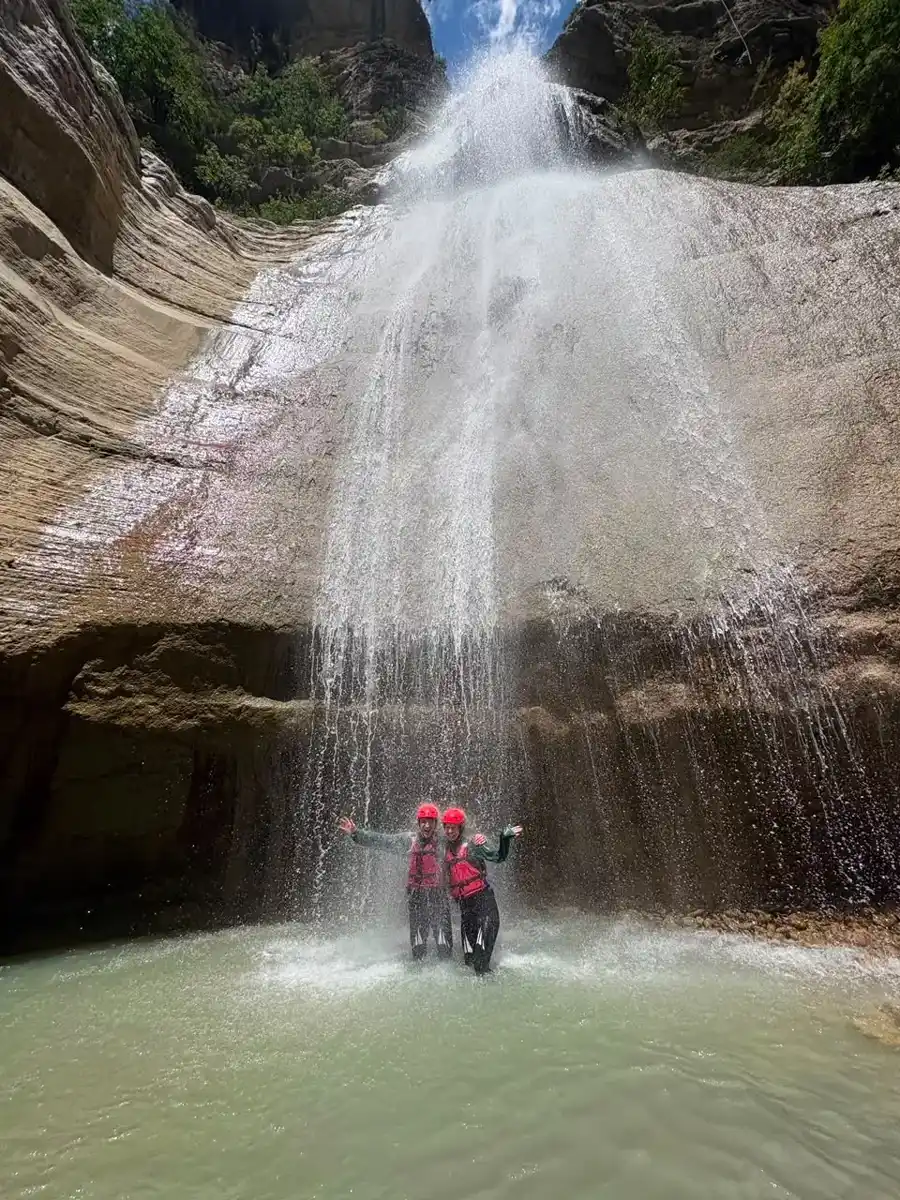
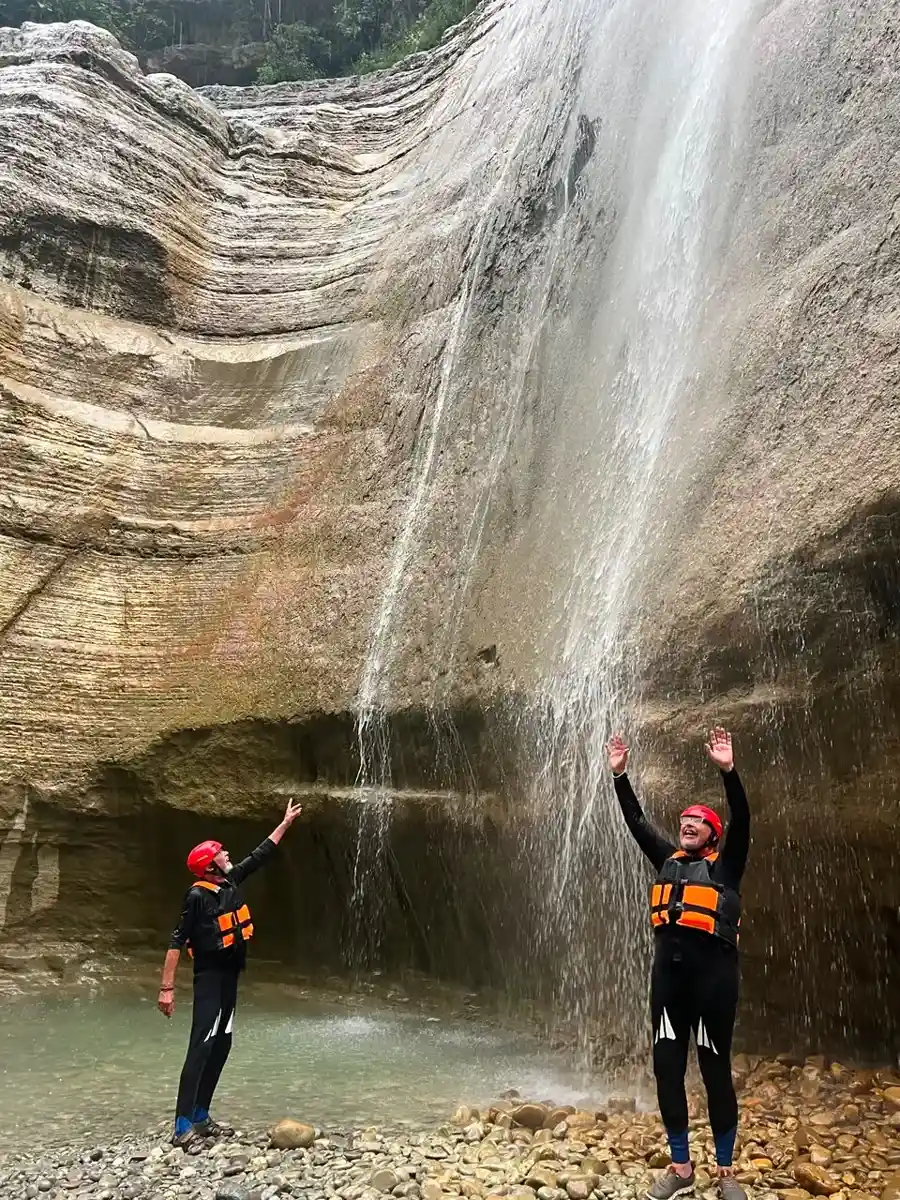
Two guests standing beneath the Waterfall of Love in Osum Canyon Guests reaching up into the spray of the Waterfall of Love in Osum Canyon

Viewpoints: Vrima e Nuses & the Old Italian Bridge

Osumi Canyon has two named viewpoints, and both sit on top of the canyon, along the road that runs above the gorge — not down inside it. If you'd rather look at the canyon than move through it, here's where to go.

Vrima e Nuses — "The Bride's Hole"

Local legend tells of a bride who vanished into the gorge here on her wedding day, and the name has carried the story ever since. It sits near the Bektashi Teqe close to Dhorës village, on the rim above the gorge, with an open view straight down into the canyon — no guide or tour required.

The Old Italian Bridge — Ura e Blezenckës

This stone bridge spans the gorge itself, and standing on it is one of the best places to take in the true depth of the canyon from above. During a rafting trip, guests pass directly beneath this same bridge from the river below — seeing it from both directions is one of the small pleasures of pairing a rim visit with a day on the water.

Neither viewpoint requires a ticket or a guide. For the narrower, deep-canyon sections — the waterfalls, the natural pools — you'll need to get on the water, by rafting or tubing, or join a guided rim hike.

When to Visit

Osumi Canyon changes considerably across the year, and the best season depends on what you want to do. For a full seasonal breakdown, see our guide to the best time to visit Osum Canyon.

Spring

Rafting season (Feb 1 – Jun 14). Snowmelt keeps the river high and the canyon's waterfalls at their fullest, with green hillsides and the most dramatic water levels of the year.

Summer

Tubing and swimming season begins mid-June. Water levels drop and warm, natural pools become inviting, and this is the busiest — though still uncrowded — time to visit.

Autumn

Tubing continues into November with fewer visitors and softer light. Rim hikes and viewpoints stay excellent as temperatures cool and the crowds thin further.

December and January are considered off-season for river activities, though the canyon itself and its free viewpoints remain visible year-round — contact us directly if you're planning a winter visit.

How to Get There

All three routes are drivable in a standard rental car, with no 4x4 required. If you'd rather not drive, let us know your starting point and we can help arrange transport as part of a booking.

Nearby: Waterfalls & Caves

Osumi Canyon sits in a wider limestone landscape dotted with springs, waterfalls, and caves — most of them an easy detour from Çorovodë.

Bogovë Waterfall

A wide travertine cascade into a turquoise pool, about 15–20 minutes from Çorovodë and a popular stop before or after a canyon activity. See our Bogovë Waterfall guide.

Pirogoshi Cave

Ancient limestone chambers carved by water beneath Mount Tomorr, close to the Bridge of Kasabashi. See our Pirogoshi Cave guide.

Also nearby is Gradec Canyon — known locally as Albania's Grand Canyon — next to Pirogoshi Cave and the Ottoman-era, 1640 Kasabashi Bridge.

Every Osumi Canyon Guide in One Place

This page is our hub for Osumi Canyon — use it to jump to any activity, planning guide, or nearby site we cover.

Activities

Nearby Sites

Planning

Frequently Asked Questions

Is Osumi Canyon free to visit?

Yes. The canyon itself has no entrance fee. Both named viewpoints — Vrima e Nuses and the Old Italian Bridge — can be visited without booking anything. Rafting, tubing, and guided hikes are optional paid activities, not a requirement to see the canyon.

Can you swim in Osumi Canyon?

Yes. Osumi Canyon has natural swimming pools that are best from mid-June through November, once water levels have dropped after the spring rafting season. See our swimming guide for the best spots.

Do you need a tour to visit Osumi Canyon?

Not to visit the canyon itself — the two rim viewpoints need no tour. A guide is only required for rafting (Feb 1–Jun 14) and tubing (mid-June to November), since both involve equipment and river access you can't arrange independently.

How long should you spend at Osumi Canyon?

A half-day is enough for a single activity like rafting or tubing. A full day lets you combine that with a canyon walk, a swim, and a stop at Bogovë Waterfall or Pirogoshi Cave.

Is Osumi Canyon safe?

Yes, when done with a guide. Rafting and tubing use certified equipment and guides who know the river; the free rim viewpoints have no barriers or signage, so sturdy shoes and normal outdoor caution are needed. See our rafting safety guide for more detail.

Is it "Osum Canyon" or "Osumi Canyon"?

Both refer to the same place. "Osumi" is the Albanian-language form and "Osum" is the shortened form most often used in English — you'll see both, including "Osum Canyon," "Osumi Canyon," and occasionally "Canyon Osum," used interchangeably.

WhatsApp